Loading...
First Round of Abstract Submission Ends: Dec 30, 2026
Extended Early Bird Ends: Jun 30, 2026

Keynote Speakers

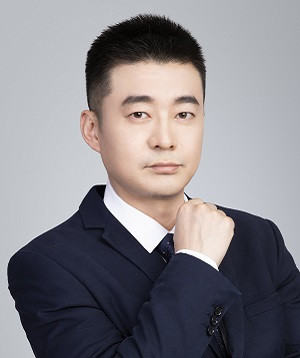
Prof. Lu Li
National University of Singapore, Singapore
Title: Frontier Research and Applications of Solid-State Batteries and Organic/Inorganic Composite Electrolytes
Dr. Li Lu is an Emeritus Professor at the National University of Singapore. His research focuses on energy storage materials and systems, with particular emphasis on solid-state batteries designed to address critical challenges in safety and energy density. His work also extends to lithium-ion and sodium-ion battery electrode materials, where he has made significant contributions to the understanding and development of high-performance energy storage technologies.
Over the course of his career, Dr. Li has made sustained and impactful contributions to both fundamental research and practical applications in the field of electrochemical energy storage. His studies span material design, interface engineering, and full-cell integration, helping to bridge the gap between laboratory innovation and real-world deployment. His research has played an important role in advancing next-generation battery technologies for applications ranging from consumer electronics to electric vehicles and large-scale energy storage systems.
Dr. Li has published more than 500 papers in leading international journals, which have collectively received over 39,000 citations, reflecting the broad recognition and influence of his work within the scientific community. He has an h-index of 100, underscoring the sustained impact and high quality of his research output.
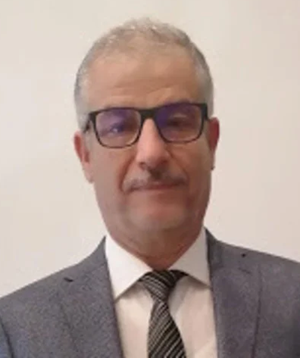
Prof. Sophia Klokishner
Moldova State University, Moldova
Title: To be confirmed.
Will update soon.
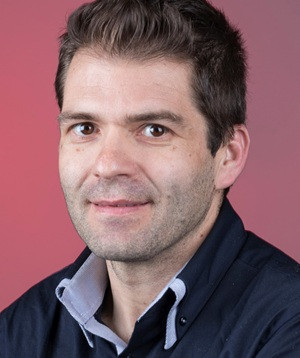
Dr. Griffete Nebewia
Sorbonne University, France
Title: Molecularly imprinted polymer for nanomedicine
Nébéwia Griffete is a young Associate Professor at Sorbonne University, working at the Physicochimie des Electrolytes et Nanosystèmes InterfaciauX (PHENIX) and co-responsible of the Inorganic Colloids (CIN) team. Since 2024 she is member of the Institut Universitaire de France (IUF). Her research focuses primarily on the development of novel synthetic ways to obtain small and stable molecularly imprinted polymer nanoparticles, with the aim of developing innovative nanomaterials for targeted therapy and imaging. Currently, she is investigating the possibility to use MIPs for diagnostic in biopsy liquid.
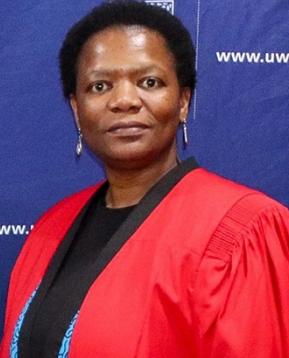
Prof. Jingwei Xie
University of Nebraska Medical Center, USA
Title: To be confirmed.
Will update soon.
Dr. Guoqiang Zhao
Sichuan Cancer Hospital and Research Institute, China
Title: Nanomaterials for enhancing the biological effectiveness of proton therapy
Research Areas: Biological effects of nanomaterials; with a focus on: Interface performance regulation of organic-inorganic hybrid nanomaterials, Nanomaterial-enhanced radiosensitization, Nanomaterial-enhanced biological effects in proton therapy;
Prof. Zhengxian Liu
Harbin Institute of Technology, China
Title: Smart polymer composites and their space deployable structures
Zhengxian Liu, Associate Professor at the School of Aerospace Science and Technology, Harbin Institute of Technology, has been selected for the 2023 Postdoctoral Innovation Talent Support Program (Boxin Program). He has long been committed to the basic theory of mechanics, intelligent composite material design, space deployable structures, aerospace applications, etc., published 19 SCI papers, presided over 6 projects including the Young Scientists Fund of the National Natural Science Foundation of China, and served as a member of the Smart Composites Professional Committee of the Chinese Mainland Federation of the International Society for Advanced Materials and Manufacturing Engineering (SAMPE), the executive director of the expert think tank of the New Material Development Alliance, the member of the Composite Structure Design Special Committee of the China Composite Materials Society, the member of the Youth Working Committee of the China Composite Materials Society, and so on
Dr. Elisa I. García-López
Università di Palermo, Italy
Title: To be confirmed.
Dr. García-López is an Associate Professor and Lecturer in Chemistry at the University of Palermo’s Department of Engineering. Her research is primarily focused on heterogeneous photocatalysis, with a specific interest in the design, characterization, and application of catalysts for biomass valorization, hydrogen generation, selective oxidation processes as well as advanced oxidation technologies.

She earned her Bachelor’s and Master’s degrees in Inorganic Chemistry from the Universidad Autónoma de Madrid in 1992. Her early career included research positions at the Institute of Catalysis and Petrochemistry (CSIC) and the Centre for Energy, Environmental and Technological Research (CIEMAT) in Madrid. In 2003, she received her PhD from the University of Palermo for her work on the physico-chemical studies of photocatalytic processes under the supervision of Prof. Mario Schiavello and Leonardo Palmisano. During her doctoral studies, she conducted research at the University of Wisconsin-Madison (USA) and later completed a one-year postdoctoral fellowship at Meisei University (Japan).

She has been an invited lecturer at prestigious institutions, including the Chinese Academy of Sciences (Beijing), Jagiellonian University (Poland), and the University of Erlangen (Germany). She serves on the editorial boards of several journals, including Research on Chemical Intermediates and Discover Catalysis (Springer) and Frontiers in Chemistry. Dr. García-López has co-authored 125 international journal articles and is the editor of the 2021 Elsevier book, Materials Science in Photocatalysis.
Prof. Juan Matos Lale
Universidad Autónoma de Chile, Chile
Title: Smart and sustainable nanocarbons for the circular economy
Prof. Dr. Juan Matos Lale completed his doctorate in Surface Physics and Chemistry through the Franco-Venezuelan Postgraduate Cooperation Program between the Central School of Lyon (France) and the Venezuelan Institute for Scientific Research in 1999 studying the "Influence of carbon materials in heterogeneous photocatalytic reactions and solar nanotechnology”. He is co-founder and director of the Chilean Association of Carbon Materials, and co-founder of the Latin American Carbon Federation, of which he was President (2016-2018). Prof. Matos is the Director (2017 - ) of the Franco-Chilean Network of Valuation of Biochar for Applications in Energy and Environmental Remediation. From 2015-2019, he was Professor of the Postgraduate Energy and of the Faculty of Chemical Sciences, of the University of Concepción (UdeC), and Researcher of the Technological Development Unit (UDT) of that university.

In 2020 he moved to the Autonomous University of Chile, and as of August 2023 he is part of the Ibero-American Institute for Sustainable Development at the Faculty of Architecture, Construction and Environment where he is a Full Professor and Senior Academician. Prof. Matos has organized the “Sustainable Materials for the Circularity Group” (SMAC Group), whose goal is to efficiently design different types of nanomaterials such as semiconductors, hybrids and different types of carbon-based materials such as nanoporous carbon, biochars, foams, vitreous carbons, nanotubes and graphene, among others, and systems doped with heteroatoms, for application in different processes related to Sustainable Development, including the conversion, production and ecological storage of different types of clean energy such as production of hydrogen, solar cells, fuel cells, photocatalytic processes for environmental remediation, mainly polluted water and air, as well as the production of solar fuels.

He has given a total of 362 presentations at international events, including 97 invited lectures and 29 plenary sessions. He has a total of 109 articles published in high-impact journals and serial books, 4 patents (2 under review), nearly 3,872 citations, and an H factor of 34 (WoS, January 30, 2026).

He has supervised 66 undergraduate theses, 14 graduate theses, and 6 postdoctoral theses. He has developed various international research and collaborative technological application projects with Mexico, Spain, and France. He has been or is the director of projects with Chilean funds such as FONDEF-IDEA, CORFO-INNOVA, FAE-SEREMI, FONDECYT, and ANILLO, among others. In 2021, 2022, 2023, 2024, and 2025, he was recognized as being included in the top 2% ranking of the most influential scientists in the world.
Prof. Mónica Oliveira
University of Aveiro, Portugal
Title: Combining Advanced Nanofluids and Microchannels for High Performance Cooling
Mónica S. A. Oliveira is an Associate Professor with Habilitation at the University of Aveiro. Her research focuses on the integration of thermophysical characterisation and modelling to understand complex materials across scales, with particular emphasis on nanofluids and advanced polymer-based systems. Her work combines experimental and computational approaches to address processing–structure–property relationships, supporting the development of high-performance and sustainable solutions for advanced thermal management and engineering applications.
Prof. Ali Abou-Hassan
Sorbonne University, France
Title: Engineering Multi-scale Magnetic and Plasmonic Inorganic Colloids Using Bulk and Flow Chemistry Approaches
Ali Abou-Hassan is Full Professor of Chemistry at Sorbonne University. His research at the PHENIX laboratory is dedicated to the design, understanding, and engineering of multiscale functional (nano)systems inclufing magnetic, plasmonic and magneto-plasmonic for different applications including biomedical and environmental using bulk and flow/microfluidics approaches. His achievements have been recognized by the Young Researcher Award in Nanoscience from the Physical Chemistry Division of the French Chemical Society in 2022. Since 2022, he is a Junior Member of the Institut Universitaire de France. In 2025, he was named Junior Distinguished Member of the French Chemical Society.
Prof. Yining Chen
Zhejiang University, China
Title: Revolutionizing Semiconductor Manufacturing- The AI Imperative
Prof. Yining Chen is with the School of Integrated Circuits, Zhejiang University, China, and the Zhejiang Provincial CMOS Integrated Circuit Innovation Center, where he leads the Yield Enhancement and Product Development divisions. He received his B.Eng. degree from Zhejiang University, the M.Sc. degree from KU Leuven, Belgium, and the Ph.D. degree from Nanyang Technological University, Singapore. Before joining Zhejiang University in 2021, he worked at IMEC, A*STAR IMRE, GlobalFoundries, and NXP Semiconductors. His research focuses on AI-driven semiconductor manufacturing, yield prediction and enhancement, root-cause analysis, defect analysis, virtual metrology, digital twins, and DTCO.