Loading...
First Round of Abstract Submission Ends: Dec 30, 2026
Extended Early Bird Ends: Jun 30, 2026

Plenary Speakers

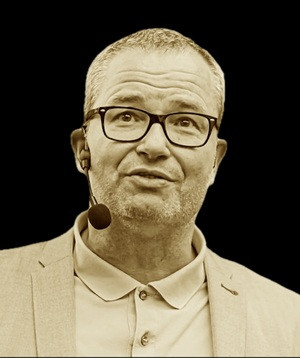
Prof. Jochen M. Schneider
RWTH Aachen University, Germany
Title: Leveraging experimentally validated quantum predictions to design next-generation resilient coating materials
Jochen M. Schneider, Ph.D. is Professor of Materials Chemistry at RWTH Aachen University, Germany. His research focuses on the quantum-mechanically guided design of thin films with tailored thermal and chemical stability, as well as elasticity. He also designs self-reporting materials.

He has studied materials engineering at FH-Furtwangen, Germany, and graduated from Hull University, U.K. with M.Sc. (1995) and Ph.D. (1997) degrees in engineering, design and manufacturing. He holds a docent degree (2001) in thin film physics from Linköping University, Sweden. After post doc stints at Linköping and Berkeley he accepted the position of Professor of Materials Chemistry at RWTH Aachen University, Germany in 2002.

In 2001, Jochen was awarded the Sofya Kovalevskaya Prize1 by the Alexander von Humboldt Foundation for his excellence in thin film materials science research. The award, which is granted for outstanding talent and a creative approach to research, is funded by the Federal Ministry of Education and Research of Germany.

Jochen was named a Fellow of the American Vacuum Society (AVS) in 20132 and Fellow of the Max Planck Society (2015) and of RWTH Aachen University (2015).

He was elected to the Board of Trustees of Leibniz Institute of Surface Engineering (IOM), Leipzig, Germany, in 2018 and in 2019 he was appointed member of the Henry Royce Institute Strategic Facilities Advisory Board, University of Manchester, Manchester, UK.

In 2020 he received the Bill Sproul award from the Advance Surface Engineering Division of the AVS. In 2022 I received the Rudolf-Jaeckel-Preis of the German Vacuum Society (DVG) and was appointed in the same year as a member of the advisory committee of the Wallenberg Initiative Materials Science for Sustainability (WISE), Linköping University, Norrköping, Sweden. In 2023 Jochen was appointed as Honorary doctor7 in the Faculty of Science and Technology, Uppsala University, Sweden. In 2025 he was awarded the Lee Hsun Lecture Award on Materials Science by the Institute of Metal Research, Chinese Academy of Sciences.

Furthermore, he serves as editorial board member in Scientific Reports (Nature Publishing Group) and Surface and Coatings Technology (Elsevier) as well as in the editorial advisory board member of Applied Surface Science Advances (Elsevier). Jochen has supervised 46 Ph.D. graduates and mentored 33 post docs.
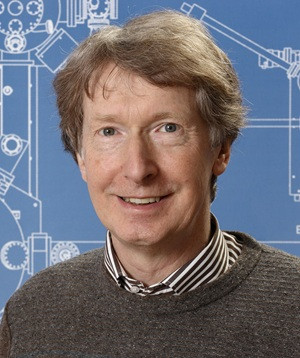
Prof. Rainer Waser
RWTH Aachen University, Germany
Title: Neuromorphic Computing – From Neuroscience Inspiration to Nanotechnology and AI Applications
Rainer Waser received his PhD in physical chemistry at the University of Darmstadt in 1984, and worked at the Philips Research Laboratory, Aachen, until he was appointed Professor at the faculty for Electrical Engineering and Information Technology of the RWTH Aachen University in 1992 and director of the Institute for Electronic Materials at the Forschungszentrum Jülich, in 1997. He was member of the Emerging Research Devices working group of the ITRS, and he has been collaborating with major semiconductor industries in Europe, the US, and the Far East. Since 2002, he has been the coordinator and spokesman of the research program on Nanoelectronic Systems in Information Technology within the Germany national research centres in the Helmholtz Association. In 2007, he has been co-founder of the Jülich-Aachen Research Alliance, section Fundamentals of Future Information Technology (JARA-FIT). Together with Professor Wuttig (physics), he headed a collaborative research center on resistively switching chalcogenides for future electronics (SFB 917) which comprised of 14 institutes within JARA-FIT and has been funded by the German national science foundation (DFG) from 2011 to 2023. In 2014, Rainer Waser received the Leibniz Prize of the DFG for his interdisciplinary work on the phenomenon of redox-based resistive switching. In 2019, he initiated the BMBF-funded structural change project ‘Neuro-inspired artificial intelligence technologies for the electronics of the future in the Rhineland region (NEUROTEC)’, in which 13 JARA-FIT institutes, AMO GmbH and four industrial companies from the region are collaborating.

Rainer Waser has published over 850 scientific articles in journals and achieved an h-index of 102 (ISI Web of Science, June 2025).
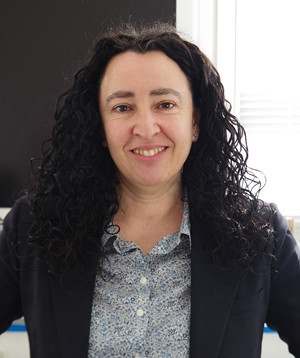
Prof. Conchi O. Ania
CEMHTI, CNRS , Université d’Orléans, France
Title: Photoluminescent carbon nanodots: applications in photovoltaics and bioimaging
Prof. Conchi Ania graduated from Univ. Oviedo (Spain) in 1999 and received her PhD in Chemistry in 2003. She performed postdoctoral stays in USA and France. In 2007 she incorporated to Agencia Estatal CSIC (Spain), where she is Research Scientist of Inst. Ciencia y Tecnología del Carbono (leave of absence). In 2017 she joined CNRS as Research Director (Orléans, France). She received the national L’Oreal-Unesco 2008 Research Fellowship “For women in Science”, for her contributions in advanced technologies based on carbon materials for water remediation. In 2016 she was the recipient of a Consolidator grant form the European Research Council. In 2023 she has received the Silver Medal of CNRS. She is Editor of Carbon journal since 2020.

Her research interests focus on nanoporous carbons with tailored surface chemistry and architectures for applications in photocatalysis and electrocatalysis for environmental remediation, gas adsorption/separation, and solar energy conversion (solar fuels, photovoltaics).
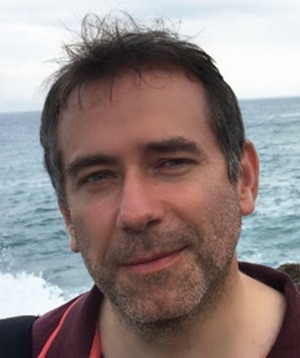
Prof. Nicolas Keller
ICPEES, CNRS, University of Strasbourg, France
Title: Nano-Engineering of Bulk and Surface Properties: Advancing Light-Driven Heterogeneous Catalysis for Environmental and Energy Sustainability
Nicolas Keller is CNRS Research Director at the Institute of Chemistry and Processes for Energy, Environment and Health (ICPEES) at the University of Strasbourg, France. He obtained his PhD in catalysis and materials chemistry in 1999 from the University of Strasbourg. He completed a postdoctoral fellowship in heterogeneous catalysis with Prof. Robert Schlögl at the Fritz Haber Institut of the Max Planck Gesellschaft in Berlin, and was appointed to the CNRS in 2001. Throughout his career, he served as JSPS invited professor at AIST in Tsukuba (Japan) in 2009 and as invited professor at the Jagellonian University in Krakow (Poland) in 2020. He has co-authored almost 200 scientific papers, reviews and book chapters, as well as filled 14 patents, and was awarded in 2016 the Simone et Cino Del Duca Foundation under the aegis of the French Science Academy. He is currently the grant coordinator for the PRIORITY European COST Action on Plastics Monitoring, Detection, Remediation, and Recovery. He chaired the 9th European Meeting on Solar Chemistry and Photocatalysis: Environmental Applications (SPEA9) in 2016 and the 8th International Conference on Semiconductor Photochemistry (SP8) in 2023.

His research primarily focuses on the design of functional materials spanning the nano- to the macro scale for heterogeneous light-driven catalysis and solar photoconversion applications, with a particular emphasis on environmental and energy transition challenges towards a low-carbon economy and industry.
Prof. Bingqing (B.Q.) Wei
University of Delaware, USA
Title: Nanotechnology for sustainable energy systems
Dr. Bingqing Wei is the George W. Laird Professor of Mechanical Engineering and serves as Director of the Center for Fuel Cells and Batteries at the University of Delaware. Before joining UD in 2007, Dr. Wei was an Assistant Professor in the Department of Electrical & Computer Engineering and Center for Computation & Technology at Louisiana State University 2003-2007. He was a Research Scientist at Rensselaer Polytechnic Institute, Department of Materials Science and Engineering, and Rensselaer Nanotechnology Center 2000-2003. From 1993 to 2001, he was a faculty member at Tsinghua University in Beijing. Dr. Wei's research portfolio spans a diverse range of topics, with a particular focus on nanomaterials and nanotechnology (carbon nanotubes and graphene), renewable energy (solar cells and photo-induced hydrogen), and advanced electrochemical energy systems (supercapacitors and batteries). He was awarded the Highly Cited Researchers award from Clarivate, selected to be a Fellow of the Royal Society of Chemistry, and appointed to be the inaugural Field-Chief-Editor of Frontiers in Nanotechnology.
Prof. Richard A. Gross
Rensselaer Polytechnic Institute, NY, USA
Title: Molecular editing of sophorolipids to interrogate structure-property relationships for diverse applications
Richard A. Gross (Ph.D., Polytechnic University) holds a Constellation Chaired Professorship at Rensselaer Polytechnic Institute (RPI) and is also a member of RPI’s Departments of Chemical and Biological Sciences. He also holds affiliate faculty positions in Biology, Chemical Engineering and Biomedical Engineering. Previously he was on the faculty of University of Massachusetts (Lowell) (1988−1998) and occupied the Herman F. Mark Chair Professorship at Polytechnic University (1998-2013). His research is focused on developing chemo-enzymatic routes to biobased materials, combining chemical methods with cell-free and whole-cell biocatalytic systems to produce new biobased and biodegradable materials as well as microbial surfactants with tuned physical and biological studies. He has over 400 publications in peer-reviewed journals with almost 36,000 citations, h-index of 99, i10-index 361, has edited 13 books, and has been granted or filed 26 patents. He has received numerous awards, including the Presidential Green Chemistry Award in the academic category (2003), induction into the American Institute for Medical and Biological Engineering (2007), Turner Alfrey Visiting Professor (2010), POLY Fellow (2015), Lifetime Achievement Award from the Bio-Environmental Polymer Society (2017), was the 2018 recipient of the Affordable Green Chemistry Award from the ACS. On January 15, 2022 he was appointed Editor-in-Chief of the Journal of Industrial Biotechnology.
Prof. Nikhil Koratkar
Rensselaer Polytechnic Institute, USA
Title: Battery Electrodes: Nano vs Micro-Structuring
Nikhil Koratkar is the John A. Clark and Edward T. Crossan Professor at the Rensselaer Polytechnic Institute (RPI). His research has focused on the synthesis, characterization and application of advanced material systems. Professor Koratkar is a winner of the NSF CAREER Award (2003), the Electrochemical Society's SES Young investigator Award (2009), American Society of Mechanical Engineering (ASME) Gustus L. Larson Memorial Award (2015), the IIT-Bombay Distinguished Alumnus Award (2019) and the RPI William H. Wiley 1866 Distinguished Faculty Award (2021). Koratkar is a Fellow of the ASME, RSC, AAAS and APS. He has published a book on graphene as an additive in composite materials and over 260 archival journal papers (>41,000 citations, H-index = 97). In 2018 and 2021, Clarivate Analytics named him in their highly cited researchers list. Koratkar has served as an Editor of CARBON (Elsevier) for 15 years and presently serves on the Honorary Advisory Board of Carbon. He is a co-founder and serves on the advisory board of a start-up company (Alsym Energy) aimed at commercializing next-generation energy storage solutions.
Prof. Zongjin Li
Macau Univ of Sci and Tech, Macao, China
Title: Will Update Soon
Dr. Zongjin Li is a Chair Professor at the Macau University of Science and Technology. He earned his B.E. from Zhejiang University in 1982, and went on to complete both his M.S. and Ph.D. at Northwestern University in Chicago in 1990 and 1993, respectively. Dr. Li is an honorary member and fellow of the American Concrete Institute, Honorary Chair of the China Group of RILEM, and the Founding President of the ACI China Chapter. In his role as chief scientist, he has spearheaded a China Key National Basic Research Project (973) that significantly elevated concrete research in China to a global standard. Additionally, he established the prestigious Gordon Research Conference series 'Advanced Materials for Sustainable Infrastructure Development' in 2014. A trailblazer in non-contact resistivity/impedance measurement for cement-based materials and a pioneer in the application of nanoscience and nanotechnology in this field, Dr. Li also introduced cement-based piezoelectric materials, opening up new avenues in civil engineering. His innovative method of in-situ polymerization of monomers during the cement hydration process has demonstrated remarkable effectiveness in enhancing the flexural strength of cement-based composites. Dr. Li is the author of 5 technical books, notably 'Advanced Concrete Technology', which is a sought-after resource in various national and major university libraries. His prolific research output includes over 400 technical papers, boasting a Google Scholar citation count of 38, 254 and an impressive H-index of 106. Furthermore, he holds eight U.S. and twenty Chinese patents. Dr. Li's outstanding contributions to the field have been recognized with the prestigious Arthur R. Anderson Medal from the American Concrete Institute in 2017 and the Distinguished Visiting Fellowship Award from the British Royal Academy of Engineering in 2014.
Prof. Sudipta Seal
University of Central Florida, USA
Title: To be confirmed.
Will update soon.
Prof. Sierin Lim
Nanyang Technological University (NTU), Singapore
Title: Protein Nanocages Applications in Human Health
Sierin Lim is an Associate Professor of Bioengineering at the School of Chemistry, Chemical Engineering and Biotechnology, Nanyang Technological University (NTU), Singapore. Her research focuses on engineering hybrid nano/microscale biosystems for health and environmental applications, including protein cage-based delivery systems and enhanced imaging of atherosclerosis. She also leads work on engineering enzymes and microbes to upcycle plastic waste into valuable products using cyanobacteria, cellulose bacteria, and yeast, and serves as Singapore PI for the UK-SG joint project on Circular Bioeconomy through Engineering Biology Network for Specialty Chemicals (CIRCBIONET). She was the founding Associate Dean for Global Partnerships at the NTU Graduate College (2019–2025), is a Singapore 100 Women in Tech honoree, and a recipient of the L’Oréal-UNESCO For Women in Science Fellowship. She earned her B.S. in Chemical Engineering and Ph.D. in Biomedical Engineering from UCLA.
Dr. María Jesús Lázaro
Spanish National Research Council (CSIC), Spain
Title: Nanostructure materials for energy and conversion electrochemical devices
Mª Jesús Lázaro holds a PhD in Chemical Sciences and is a Research Professor at the ICB_CSIC (Spanish National Research Council) and Institutional Delegate of CSIC in Aragón.

Her research throughout her career has focused on the rational use of energy resources, energy conversion and storage, and the reduction of pollutant emissions into the atmosphere. Currently, she works on hydrogen fuel cells, metal-air batteries, redox flow batteries, electrolysis, and CO2 conversion, as well as hydrogen and ammonia energy vectors. She is an expert in the development of new materials, nanostructured catalyst.

She is one of the most cited researchers in Spain in the field of Energy and she has published more than 300 papers (H = 69). She has carried out 80 research projects, 14 contracts, has supervised 18 theses, and holds 6 patents.

Alongside her scientific career, she has undertaken significant management responsibilities. She was director of the Instituto de Carboquímica from 2010 to 2014 and is currently the Institutional Delegate of the CSIC in Aragón, a position she has held since October 2015.

She was the president of the Spanish Carbon Group between 2015 and 2023 and of the European Carbon Association between 2018 and 2022. She is currently the President of the Association of Women Researchers and Technologists in Aragón.